

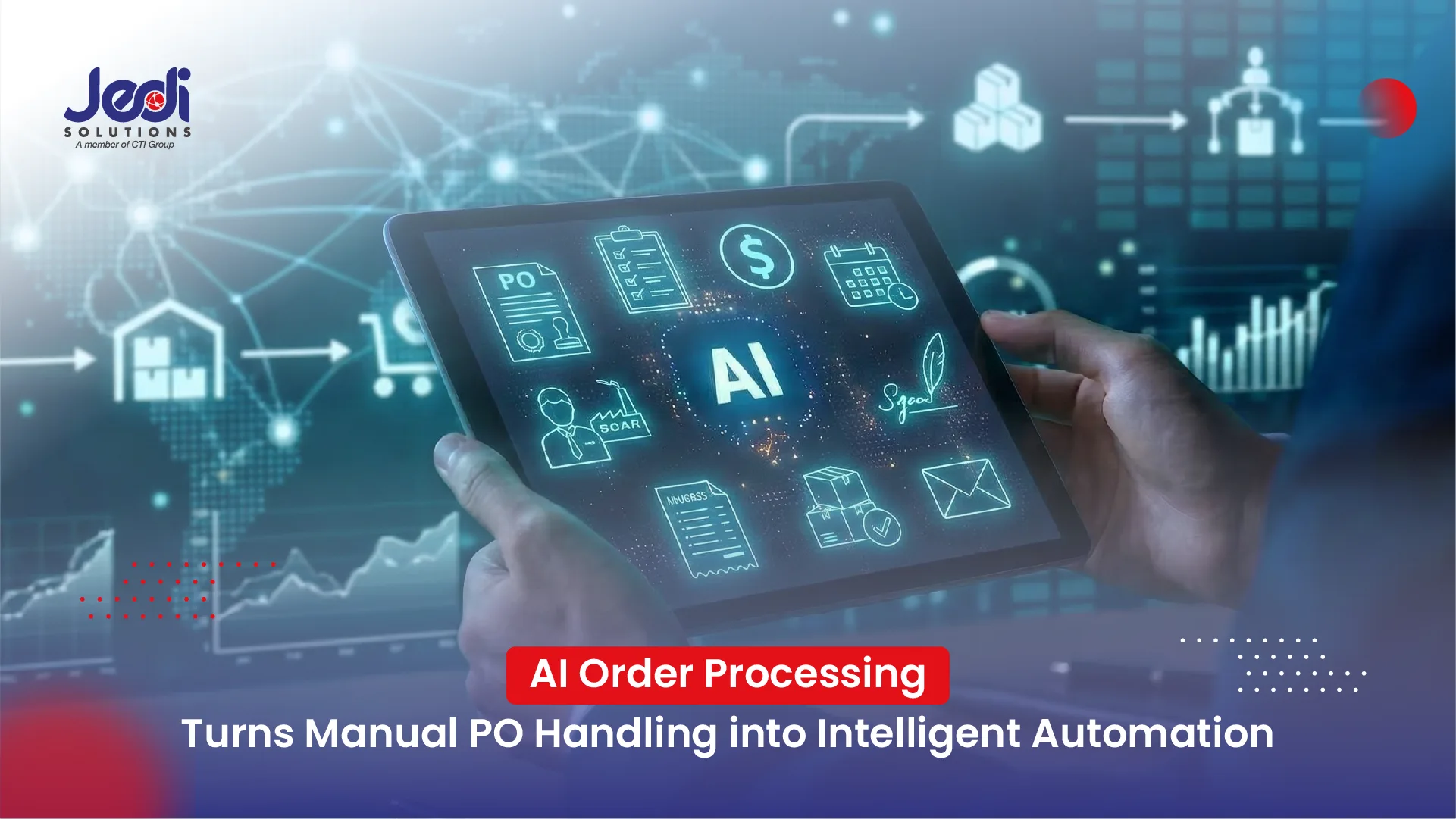
According to a report by McKinsey & Company, nearly 60 percent of operational activities in businesses can already be automated using existing technologies. One of these activities is document and data-based processes such as order processing. Tasks that previously required hours of verification, data entry, and validation can now be completed automatically through intelligent systems.
Meanwhile, research by Gartner shows that organizations adopting intelligent automation can improve operational efficiency by up to 30 percent while reducing human error caused by manual processes. This is why AI order processing has become a strategic focus for companies with high transaction volumes such as manufacturing, distribution, and logistics.
Why Order Processing Still Becomes a Bottleneck?
Even though many organizations have implemented ERP systems and digitalized business workflows, order processing often still relies on manual processes. Purchase Orders from customers typically arrive in various formats including email attachments, PDF files, or scanned documents that must be reviewed and processed by the operations team.
Reading documents, extracting data, entering information into systems, and verifying order details require significant time and effort. When order volumes increase, these repetitive tasks often create bottlenecks that slow down the entire business workflow.
As a result, both cash flow and customer experience are affected. Companies frequently face delayed order processing that slows production schedules, late invoicing that increases Days Sales Outstanding, data entry mistakes, limited visibility into order status, and declining trust from customers and distributors.
Key Challenges in Traditional Order Processing
Manual workflows remain one of the biggest challenges in traditional order processing, making the process vulnerable to errors and inefficiencies. Several issues commonly prevent organizations from achieving optimal operational efficiency.
1. Time Consuming Manual Work
Manual processing often involves copying and pasting information from PDF files into ERP systems, entering data line by line, and performing repeated checks to ensure the accuracy of each entry.
2. Limitations of Conventional OCR
Traditional OCR technology is only capable of reading text. It does not understand document context and cannot validate information based on business rules, which limits its usefulness in complex operational workflows.
3. Dependence on Legacy Systems
Many organizations still rely on legacy ERP systems that are difficult to modify. This makes visibility into the order lifecycle limited. At the same time, integration with modern tools can be expensive and complex, especially when many steps in the process remain semi manual.
Transforming AI Order Processing with Cognitive Document Automation

One of the technologies driving transformation in order processing is Cognitive Document Automation. This technology uses artificial intelligence to read, understand, and extract information from different types of documents automatically.
With the help of AI, systems can identify key information such as purchase order numbers, customer names, product details, and order quantities without manual input.
Cognitive document automation represents the evolution of OCR into AI powered document understanding by combining Machine Learning, Natural Language Processing, Computer Vision, and RPA. This solution enables organizations to transform document-based processes that were previously manual into faster and more accurate automated workflows.
The technology can read and interpret Purchase Orders automatically through four key steps. These include extracting essential data such as vendor name, SKU, quantity, and price, classifying the document, validating information based on business rules, and detecting anomalies. Cognitive Document Automation can also integrate directly with ERP systems without changing the core architecture.
From Purchase Order to Warehouse: End-to-end Automated Order Processing
By combining AI and RPA, companies can build an end-to-end AI order processing workflow that starts from order intake and continues through delivery tracking and monitoring in real time. A typical automation workflow includes the following steps.
- Purchase Order attachments are downloaded from email or customer portals and analyzed by AI.
- The system extracts and validates key data automatically.
- RPA bots input the verified data into the ERP system.
- The system checks product availability in the warehouse.
- Order status is updated automatically and shared with customers.
- Production and warehouse teams also receive updated order status information.
Case Study: Warehouse Order Status Automation in Manufacturing
One example of automated order processing implementation is warehouse order status automation in the manufacturing sector. Before automating production processes, manufacturers often struggle with thousands of orders that must be checked manually while order status updates need to be maintained consistently.
Manual processes are not scalable and require significant time and effort.
To improve accuracy, precision, and efficiency, automation systems monitor orders directly from the warehouse and update information in real time. Bots access the warehouse management system, download order data, and determine the status based on predefined rules and operational standards.
As a result, organizations gain better visibility across the order lifecycle while automation dramatically increases operational speed. Manual workload is significantly reduced, and companies can see measurable return on investment.
Strategic Impact for Manufacturing Industry
Implementing AI order processing not only improves operational efficiency but also delivers strategic value for manufacturing organizations.
Some of the most important benefits include:
- Improved operational efficiency by automating repetitive manual tasks
- Reduced operational costs and fewer processing errors
- Higher accuracy and consistency across workflows
- Greater scalability without increasing headcount, allowing companies to handle peak demand periods
- Reduce bottlenecks when order volumes increase
- Stronger compliance and audit readiness through standardized workflows
- Faster data driven insights for monitoring business process performance
- A stronger foundation for smart manufacturing supported by cleaner data and continuous performance improvement
Read More: Why AI Fails Without Data Automation: Four Benefits Businesses Cannot Ignore
Time to Move from Manual to Intelligent Order Processing with Jedi
It is time for organizations to transition from manual workflows to intelligent order processing to reduce the complexity of modern business operations. Through its AI Order Processing solution, Jedi helps companies combine the power of artificial intelligence and RPA to unlock operational efficiency while automating routine tasks and complex workflows.
As part of CTI Group, Jedi supports organizations that want to move from manual processes toward intelligent order processing that is faster, more accurate, and ready to support future business growth. Contact Jedi team today to start automating repetitive tasks across your operations.
Author: Ervina Anggraini – Content Writer CTI Group