
The year 2026 has been a wake-up call for Indonesia’s financial industry. Market turbulence that wiped out roughly USD 80 billion in value, combined with increased global scrutiny over governance, made one thing clear: trust is fragile, and digital systems cannot afford to fail. When markets move fast and regulatory pressure rises, even small disruptions can quickly escalate.
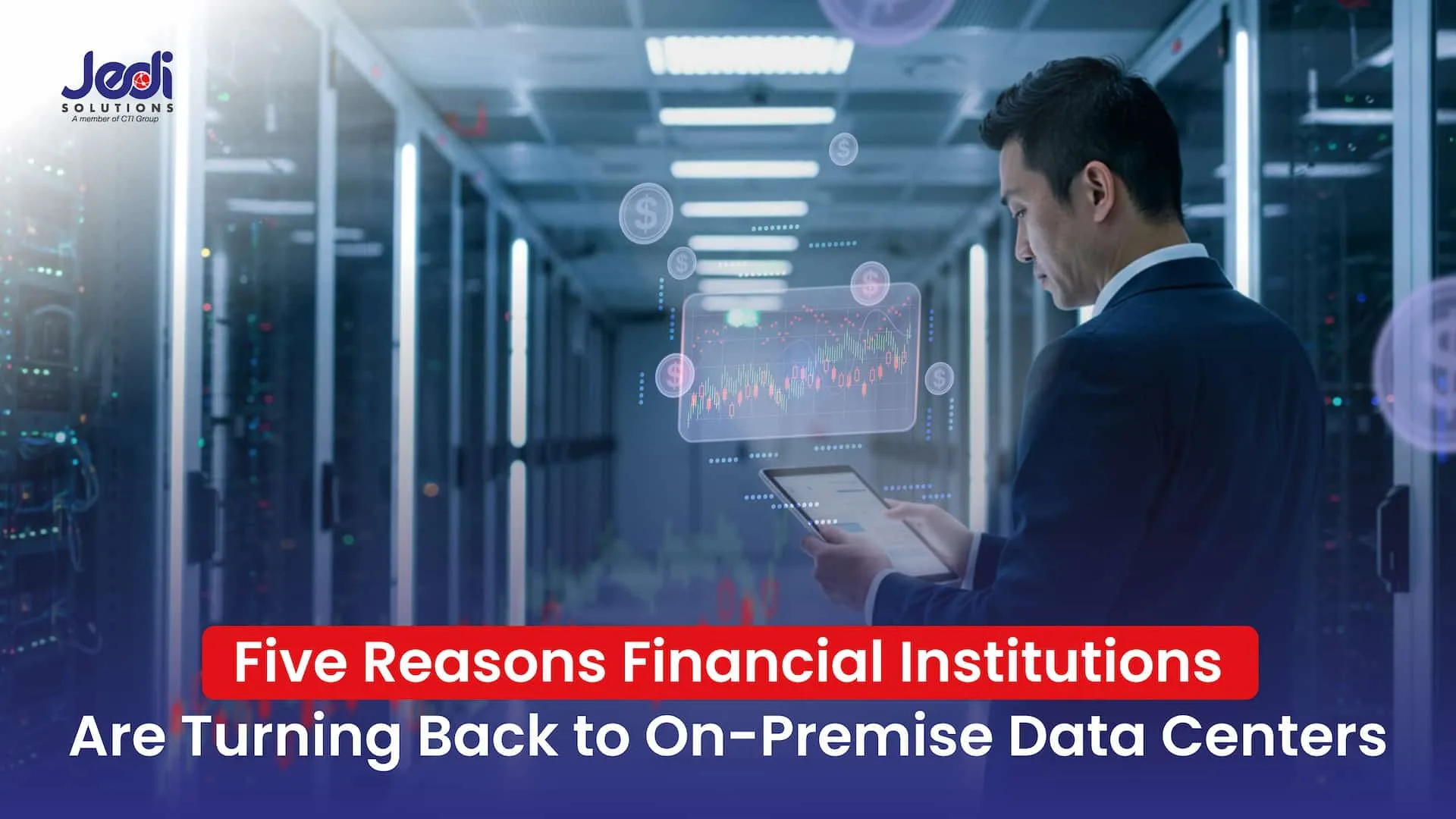
In this environment, IT infrastructure is no longer a back-office concern. It has become a core pillar of operations, compliance, and public confidence. That is why many financial institutions are doubling down on on-premise data centers, driven by a renewed need for control, predictability, and operational stability.
Why On-Premise Data Centers Are Regaining Ground in Financial Services

For financial institutions, infrastructure decisions are driven less by trends and more by risk management. Sensitive data, constant audits, and core systems that must run without interruption leave little room for compromise. In that context, on-premise data centers continue to stand out as a practical and dependable model.
So what keeps them relevant today? Here are five reasons financial institutions continue to rely on them.
1. Data Security
With an on-premise data center, institutions retain direct control over their data. Physical location, access rights, and security policies are all defined internally, without shared environments or blurred responsibilities.
For the financial sector, this level of control is a baseline requirement to protect customer information and high-value transactions.
2. Regulatory Compliance and Operational Control
Financial regulations evolve constantly. Audits can happen without warning, and compliance standards can change quickly. On-premise data centers make compliance easier to demonstrate because data flows, access, and operations are clearly defined and directly managed.
Internal teams also maintain the flexibility to adjust controls and policies without depending on third-party processes or extended coordination.
3. Cost Stability
For systems that operate around the clock, cost predictability matters. On-premise data centers help institutions avoid fluctuating, usage-based costs that are difficult to forecast and manage over time.
A more stable cost structure supports long-term budgeting, especially during periods of economic uncertainty.
4. Performance and Availability for Mission-Critical Systems
Core banking platforms, trading systems, and risk management applications cannot tolerate delays. On-premise data centers allow performance to be optimized based on application needs, with controlled latency and consistent availability.
In volatile market conditions, system responsiveness can be the difference between maintaining control and facing operational fallout.
5. Legacy Systems and Realistic Transition Paths
Many financial institutions still depend on complex legacy systems that cannot be migrated overnight. On-premise data centers provide a stable environment to keep these systems running while enabling gradual, controlled modernization.
This approach reduces disruption, lowers risk, and keeps daily operations secure during transition phases.
Jedi Colocation & Data Center: A Practical Way to Run On-Premise at Scale
Maintaining on-premise principles does not mean institutions must operate data centers entirely on their own. As security, compliance, and uptime requirements grow more demanding, colocation has become a practical way to retain control without carrying the full operational burden.
This is where Jedi Colocation & Data Center (JCD) fits naturally. With a Tier III data center environment, international certifications, and 24/7 monitoring, JCD supports mission-critical financial systems with the reliability the industry expects. Control over systems and data remains with the institution, while facility operations, security, and availability are handled professionally.
Building an Infrastructure Foundation Financial Institutions Can Rely On
Through Jedi Solutions, part of CTI Group, financial institutions are supported in building a more structured, controlled, and resilient data center foundation through colocation services designed specifically for financial industry requirements.
Contact us today to prepare a data center infrastructure that can support the operational demands of today’s financial environment.
Author: Danurdhara Suluh Prasasta
CTI Group Content Writer