
Digital transformation, AI adoption, and the growth of hybrid cloud are making business infrastructure needs increasingly complex. According to the Flexera 2026 State of the Cloud Report, 73 percent of organizations now adopt hybrid cloud to gain greater flexibility, performance, and control over business workloads.
According to Gartner, many enterprises are expected to run AI workloads on hybrid infrastructure within the next few years. This trend is driving organizations to establish an infrastructure foundation capable of securely and reliably connecting diverse IT environments.
However, many businesses still view a data center merely as a facility for housing servers and storing backup data. According to the Uptime Institute, more than 60 percent of data center outages result in significant financial losses for organizations.
This limited perspective prevents many organizations from fully realizing the strategic value of a modern data center, including improving infrastructure cost efficiency, ensuring business continuity, gaining access to interconnected digital ecosystems, and building a robust foundation for AI and hybrid cloud initiatives.
Data Center Are More Than Just “Storing Server”
The traditional perception of a data center as merely a facility containing server racks and networking equipment is no longer relevant. Modern data centers have evolved far beyond that role, transforming from passive storage facilities into active infrastructure that supports end-to-end business operations.
Today, data centers serve as the backbone that enables business applications, digital services, cloud platforms, data analytics, and AI workloads to operate efficiently while facilitating seamless cross-platform collaboration. Modern data centers function as centralized hubs for data management, connectivity, security, and service availability that support business operations around the clock.
Virtually every digital service used by businesses and consumers—from e-commerce applications, online banking systems, streaming platforms, and cloud services to enterprise ERP systems—relies on dependable data center infrastructure. When a data center experiences disruption, the entire chain of digital services that depends on it can be affected.
As businesses become increasingly reliant on digital systems, the availability of reliable data center infrastructure has become a critical factor in maintaining productivity, customer experience, and business continuity.
Enterprise Data Center Requirements in Digital Era
In today’s digital era, companies face new challenges driven by explosive data growth, AI workload demands, and increasingly complex hybrid infrastructure environments. These dynamics reflect the complexity of modern business operations and the growing critical demand for colocation and modern data center services among enterprise organizations.
Organizations today need data centers capable of
- Supporting hybrid infrastructure and hybrid cloud environments
- Guaranteeing availability of applications and business services
- Providing fast and stable connectivity
- Maintaining security of data and systems
- Supporting business expansion with flexibility
- Accommodating AI and data analytics workloads
As a result, businesses are no longer looking only for data center facilities and colocation services; they are seeking strategic partners that can support their digital transformation journey.
The Evolution of Modern Data Centers for Businesses
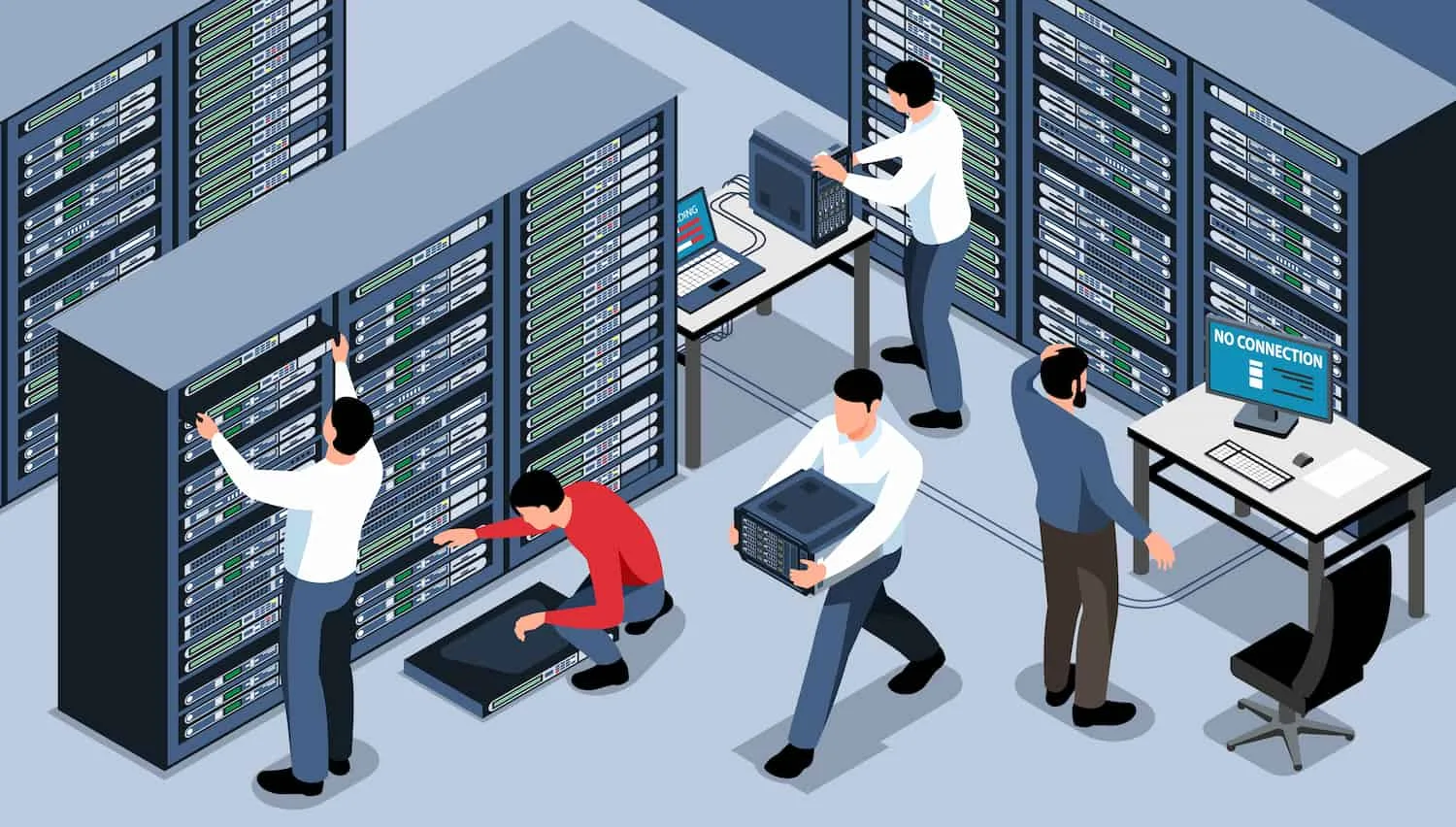
Technological advancement has transformed the concept of data centers from passive infrastructure into active digital ecosystem hubs. Today’s data center infrastructure offers far more than just rack space and power. In detail, the following illustrates how modern data centers have evolved far beyond the traditional server room. Here is a closer look at how data centers have evolved well beyond the traditional server room.
From Standalone Facilities to Interconnection Ecosystem
Early-generation data centers were closed facilities built by individual organizations for their own internal use. This model came with significant limitations, including high construction and maintenance costs, single points of failure, and a lack of connectivity to broader digital ecosystems.
Modern data centers built on neutrality and interconnection principles have completely transformed this model. They operate as open platforms that enable organizations to connect with hundreds of network providers, cloud providers, and content providers within a single ecosystem.
From Air Cooling to Liquid Cooling for AI
The growing demand for AI-intensive computing has driven significant innovation in data center design. Traditional air-cooling systems, which were originally optimized for conventional computing workloads, are increasingly being supplemented by liquid cooling technologies.
These systems provide greater efficiency in managing the high-density computing requirements associated with modern AI workloads.
From Reactive to Sustainable
Modern data centers place sustainability at the forefront of their operations. Power and lighting systems are controlled through automated sensors, ensuring energy is consumed only when needed. Globally, leading data centers operators already power approximately 96 percent of their operations using renewable energy sources.
From Local Standard to International Certifications
Modern enterprise data centers adhere to stringent international standards, including ISO certifications for management systems, ASHRAE technical guidelines for thermal management, and Uptime Institute Tier classifications that define levels of redundancy and availability.
Compliance with these standards ensures that the infrastructure hosting your organization’s digital assets is managed according to world-class engineering practices rather than minimum operational requirements.
Modern data center facilities typically include:
- Redundant power infrastructure
- UPS dan backup power system
- Multi-network connectivity
- Real-time infrastructure monitoring
- Physical dan cyber security
- 24/7 technical support
Additionally, many organizations are adopting colocation models because they are more cost-effective than building and operating their own data centers. Through colocation services, businesses gain access to enterprise-grade infrastructure without making significant investments in facility construction, backup power systems, cooling infrastructure, and day-to-day operations.
5 Benefits of Modern Data Centers as Digital Ecosystem Hubs
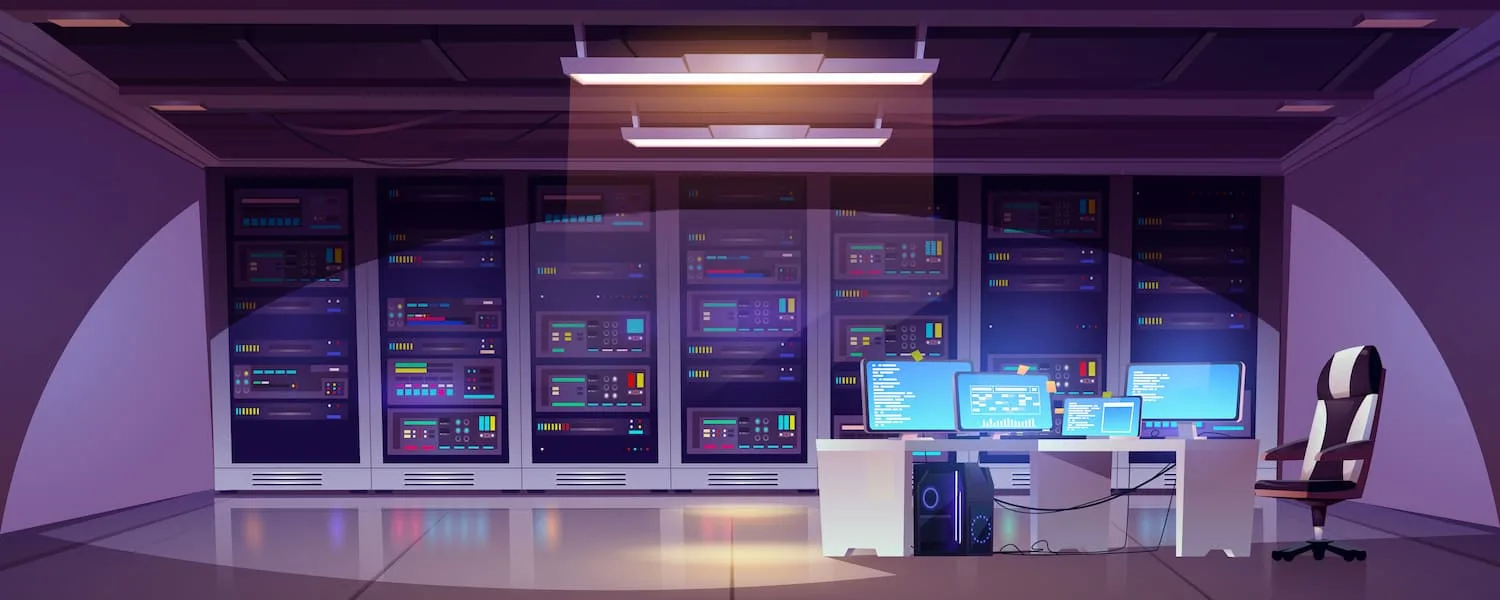
The role of the modern data center has evolved into that of a digital ecosystem hub, connecting businesses with various digital services within a single integrated environment. This enables all components of a business’s digital ecosystem to converge within one modern data center. Here are the five primary benefits that modern data centers deliver.
Improved System Availability and Reliability
Modern data centers are designed with redundant infrastructure that helps maintain service availability even when individual components experience failures. Backup power systems, UPS infrastructure, and advanced monitoring capabilities help businesses minimize downtime risks that could disrupt operations.
Reduced Infrastructure Investments
Building and operating a private data center requires substantial capital investment, including facility construction, cooling systems, backup power infrastructure, and skilled operational personnel. Through colocation services, organizations can access enterprise-grade infrastructure without significant upfront capital expenditure.
Support for Business Continuity
Power outages, hardware failures, and natural disasters can have severe consequences for business operations. Modern data centers provide resilient environments specifically designed to maintain service continuity and minimize downtime risks.
Accelerated Infrastructure Deployment
Companies no longer need to wait for new facility construction when they require additional capacity. With colocation services, implementing new servers and devices can be completed far more quickly, directly supporting the dynamic demands of growing businesses.
Strengthen Data and System Security
Security is a critical aspect of modern digital operations. Modern data centers are typically equipped with physical access controls, surveillance systems, continuous monitoring, and strict security standards designed to protect business assets and sensitive data.
The Importance of Interconnection in Modern Data Centers
One of the key differentiators between modern data centers and traditional facilities is interconnection capability.
Interconnection enables businesses to establish direct connections with various digital ecosystems, including cloud service providers, internet service providers, business partners, content providers, financial networks, and business applications.
Interconnection refers to the ability to directly connect business infrastructure to partners, service providers, and other networks within the same data center ecosystem through cross-connects (in-building connections) or cross-links (connections between facilities).
Unlike public internet connections, which often traverse multiple hops and may experience congestion, direct interconnection delivers predictable latency, guaranteed bandwidth, and enhanced security.
Through interconnection, data can move faster, more securely, and more efficiently than through traditional public internet connections.
For organizations adopting hybrid infrastructure strategies, interconnection is especially important because it enables seamless integration between on-premises environments, cloud platforms, and business applications.
Beyond improving performance, interconnection also helps reduce latency, provides multi-ISP access for greater redundancy and uptime, enhances reliability, and accelerates data exchange between systems.
Jedi Solutions as Your Strategic Partner for Colocation and Modern Data Centers
As business requirements continue to evolve, organizations need more than a traditional data center provider.
Maximizing the benefits of a modern data center requires not only selecting the right facility but also partnering with a trusted advisor that understands your business objectives and can guide your infrastructure transformation journey from planning through long-term operations.
JEDI Solutions as part of the CTI Group help organizations build a secure, scalable digital infrastructure foundation that is ready to support future business demands. Through its colocation and data center services, organizations gain access to enterprise-grade facilities, reliable connectivity, 24/7 operational support, and a robust digital ecosystem that enables hybrid cloud adoption, AI initiatives, and long-term business transformation.
Ready to build a more secure, scalable digital infrastructure that’s prepared for the AI era?
Consult with the Jedi Solutions team to discuss your organization’s data center and colocation requirements. We’ll help you design a solution tailored to your business needs—from infrastructure modernization and hybrid cloud adoption to long-term growth and expansion strategies.
Author: Ervina Anggraini – Content Writer CTI Group