
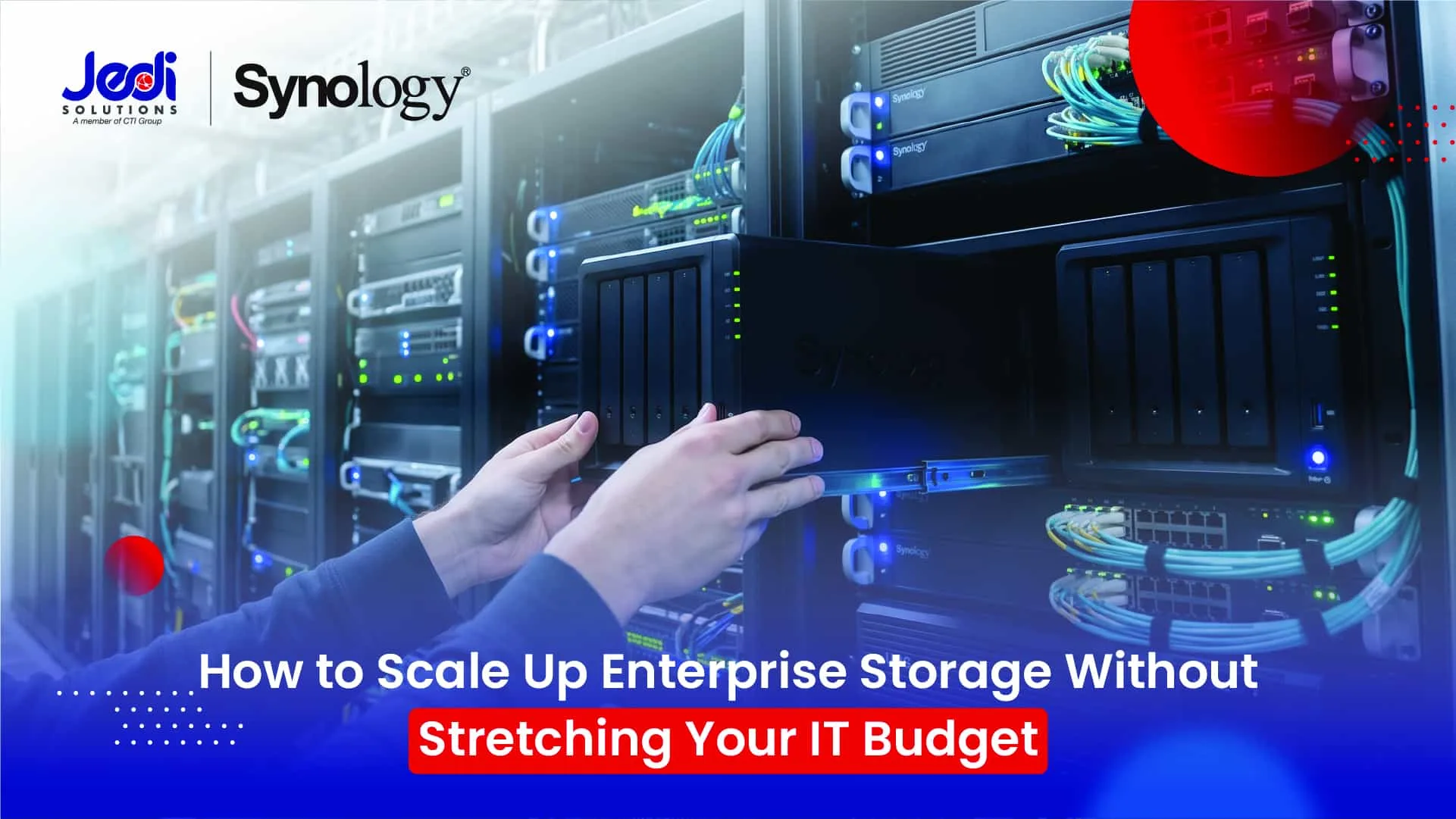
Business growth almost always comes with the same challenge: data keeps growing, while IT costs and complexity cannot keep increasing at the same pace.
Documents, databases, backups, operational data, and surveillance footage from multiple locations all require more storage capacity. When businesses simply add storage whenever capacity runs low, they can end up facing recurring hardware investments, increasingly complex infrastructure, and rising operational costs.
That is why enterprise storage needs to be designed not only for today’s requirements, but also for future growth, allowing businesses to expand capacity without having to replace their entire infrastructure every time their needs change.
Why Is Enterprise Storage Becoming More Important as Businesses Grow?
As a business grows, so does the amount and variety of data it needs to be managed. Documents and databases now sit alongside backups, operational data, and surveillance footage generated across different locations. For businesses with multiple branches, keeping all this data available and consistently managed can quickly add complexity to day-to-day IT operations.
Surveillance is one workload that requires particular attention. Higher-resolution cameras provide better image quality and more detail, but they also generate larger video files and increase storage and bandwidth requirements. Finding the right balance therefore becomes important, with bitrate and video compression helping maintain sufficient video quality without consuming storage capacity unnecessarily.
The challenge becomes even greater when data is spread across multiple servers and locations. IT teams need to make sure data remains available, systems can be monitored, and access is limited to authorized users. At the same time, backup and redundancy strategies are needed to reduce the risk of data loss when hardware failures or system disruptions occur.
As a result, enterprise storage is no longer simply about how many terabytes are available. Businesses need an infrastructure that can manage data more centrally, maintain availability and security, and expand as requirements grow without allowing IT costs and complexity to spiral out of control.
Building Enterprise Storage That Scales and Is Easy to Manage
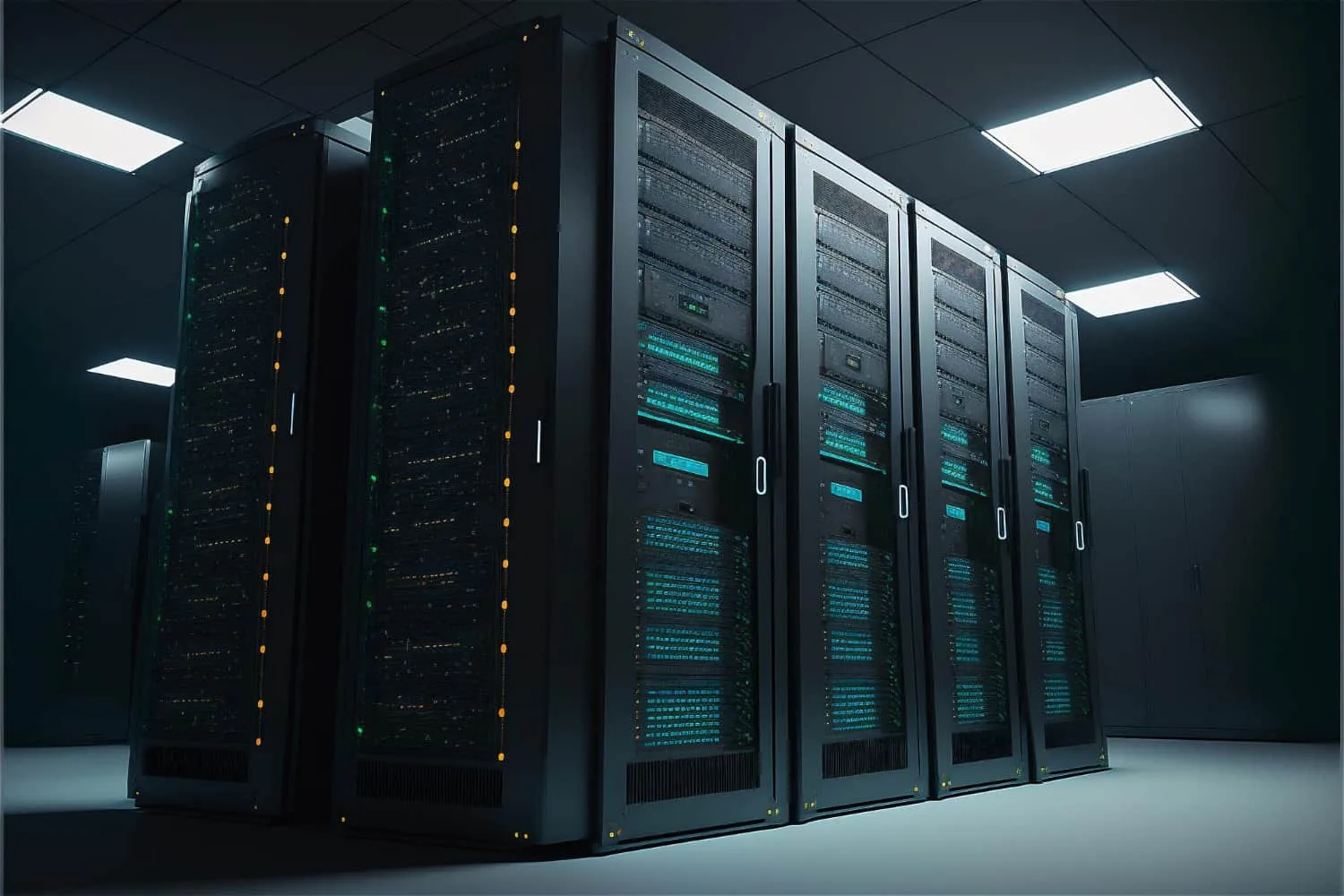
As data continues to grow, adding storage every time capacity runs low is not always the most effective approach. Businesses need an architecture that can expand gradually with their requirements, allowing them to increase capacity without replacing the entire infrastructure already in place.
Scalability is equally important for surveillance environments. The number of cameras can increase as a business expands, along with the amount of footage that needs to be stored and the number of locations that need to be monitored. Storage therefore needs enough flexibility to accommodate additional capacity, devices, and locations as requirements to evolve.
For organizations with multiple branches, centralized management can also simplify day-to-day operations. IT teams can monitor cameras and locations from a central system, manage dashboards, and receive notifications when specific events are detected. This can reduce the need for on-site maintenance at every location while keeping system management more consistent.
For businesses, this approach creates room to grow without having to rebuild their infrastructure each time requirements change. Storage can expand alongside the business, while management remains within a more controlled and centralized environment.
Optimizing Enterprise Storage to Reduce Total Cost of Ownership
When investing in enterprise storage, the cost of the hardware is only one part of the equation. Over time, businesses also need to account for capacity expansion, maintenance, licensing, backup, and day-to-day operational requirements. That makes Total Cost of Ownership (TCO) an important consideration, not just the initial purchase price.
NAS can be one option for building a more flexible storage environment. Beyond providing network-connected storage, a NAS platform can support multiple workloads within the same infrastructure, from file sharing and backup to surveillance recording and management. This can help businesses make better use of their infrastructure without relying on separate systems for every requirement.
Storage efficiency can also be improved by changing how data is recorded. In surveillance environments, for example, event-triggered recording allows systems to record based on predefined events, such as motion or other conditions detected by the camera. This helps allocate storage capacity to footage that is more relevant, particularly as the number of cameras and retention requirements increase.
RAID can provide another layer of storage-level redundancy. When a drive fails, data can remain available depending on the RAID configuration in use. Together, scalability, more efficient use of storage capacity, and redundancy can help businesses manage costs while maintaining operational continuity.
Synology Enterprise Storage for Integrated Storage and Surveillance
When storage is also used to support surveillance, capacity is only part of the requirement. Teams need practical ways to monitor what is happening, locate specific footage, and respond to events without spending hours manually reviewing recordings.
Synology Surveillance Station addresses these needs with features such as Smart Search, which allows teams to search recordings based on specific conditions, including motion, missing objects, foreign objects, camera occlusion, focus loss, and no-idle zones. When a particular incident needs to be investigated, relevant footage can be located more quickly and systematically.
Event detection can also make surveillance more responsive than simply recording footage continuously. Depending on camera support, Surveillance Station can detect events such as motion, audio, tampering, PIR, and advanced events, which can then be used to trigger recordings or notifications.
For monitoring, teams can view live feeds while managing recordings from multiple cameras and locations through centralized management. Role-based permissions also allow businesses to determine what each user can access or manage, from viewing live feeds to configuring cameras or handling recordings. This helps align system access with individual responsibilities.
Together, these capabilities create a more integrated environment where storage, surveillance, monitoring, and access control work alongside one another. Data is not simply stored; it can be managed and used more effectively to support security and daily business operations.
Modernize Your Enterprise Storage with Jedi Solutions and Synology
Building scalable enterprise storage requires more than choosing devices with large capacities. The infrastructure needs to be designed around workloads, data volumes, number of locations, surveillance requirements, and future business growth.
With Jedi Solutions, part of CTI Group, businesses can receive end-to-end support, from enterprise storage consultation and solution design to Synology enterprise storage implementation and integration with networking and security. Technical support and managed services can also help keep the infrastructure optimized after implementation, allowing internal IT teams to focus on core business priorities instead of handling every aspect of day-to-day storage operations.
With the right planning, businesses can build storage that is easier to scale, more cost-efficient, and better equipped to support growing data and surveillance requirements.
Contact Jedi Solutions to discuss your enterprise storage needs and find a scalable, efficient solution designed around your business infrastructure.
Author: Wilsa Azmalia Putri
Content Writer CTI Group