
AI is not only changing how enterprises process data. It is also transforming the infrastructure required to support it. The International Energy Agency estimates that global data center electricity consumption will increase from approximately 485 TWh in 2025 to around 950 TWh by 2030, while electricity consumption from AI-focused data centers is projected to triple. At the same time, AI server power density increased 11-fold between 2020 and 2025, meaning AI growth requires not only more servers, but also significantly greater power capacity and cooling infrastructure.
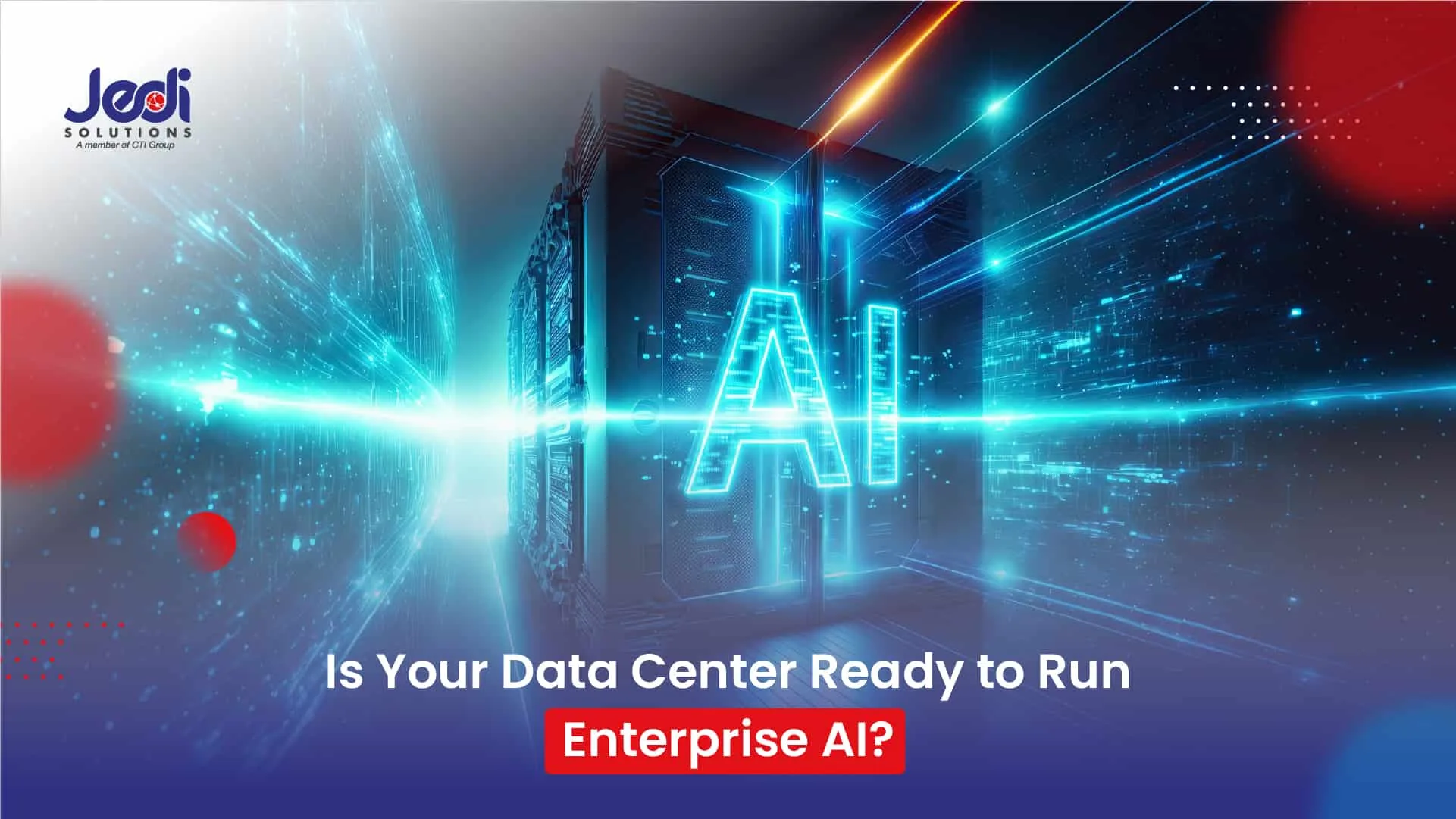
This is why traditional IT infrastructure is increasingly being pushed beyond its original design assumptions when supporting AI training, inferencing, generative AI, and agentic AI at enterprise scale. This is because AI factories as integrated systems combining accelerated computing, high-speed networking, storage, software, power, and cooling. Therefore, readiness is not determined by GPU availability alone, it also depends on whether the data center can reliably and sustainably support AI workloads. Is your data center infrastructure equipped to meet the demands of AI workloads?
Why Traditional IT Infrastructure IT No Longer Enough for AI?
Traditional IT infrastructure was primarily designed for conventional enterprise applications such as ERP, databases, email, web applications, and virtual machines. AI workloads are fundamentally different.
AI requires large-scale parallel processing, high-speed data movement, intensive communication between GPUs, and increasing compute capacity as models and user demand grow
AI Workloads Differ from Conventional Business Applications
Traditional business applications typically rely heavily on CPUs and process structured transactions. AI workloads such as model training, fine-tuning, generative AI, and real-time inference require significantly greater parallel processing capabilities.
For example, NVIDIA has developed dedicated Enterprise Reference Architectures for AI factories across different deployment scales, reflecting the need for an infrastructure approach that differs from conventional server environments.
The Need for Significantly Higher GPU Compute
GPUs is a key component of accelerated computing for AI. However, as GPU density increases, so does the amount of power require by the infrastructure.
The challenge is not simply delivering more electricity. The data center must also provide reliable, scalable, and redundant power distribution capable of supporting high-density workloads.
Rising Bandwidth and Data Transfer Requirements
Within an AI cluster, GPUs and compute nodes need to exchange data continuously. Network bottlenecks can slow down training and inference while reducing the effective utilization of high-value compute resources.
Modern AI architectures therefore require high-bandwidth, low-latency connectivity.
Low Latency Matters for Real-Time AI Inference
For use cases such as AI assistants, agentic AI, fraud detection, industrial AI, and other real-time applications, response time can directly affect user experience and business outcomes. High latency can reduce the effectiveness of AI applications, particularly when models depend on fast access to data, storage, or connected enterprise services.
This means compute, storage, networking, and connectivity need to be designed as an integrated architecture rather than independent infrastructure components.
What Makes a Data Center Suitable for AI?
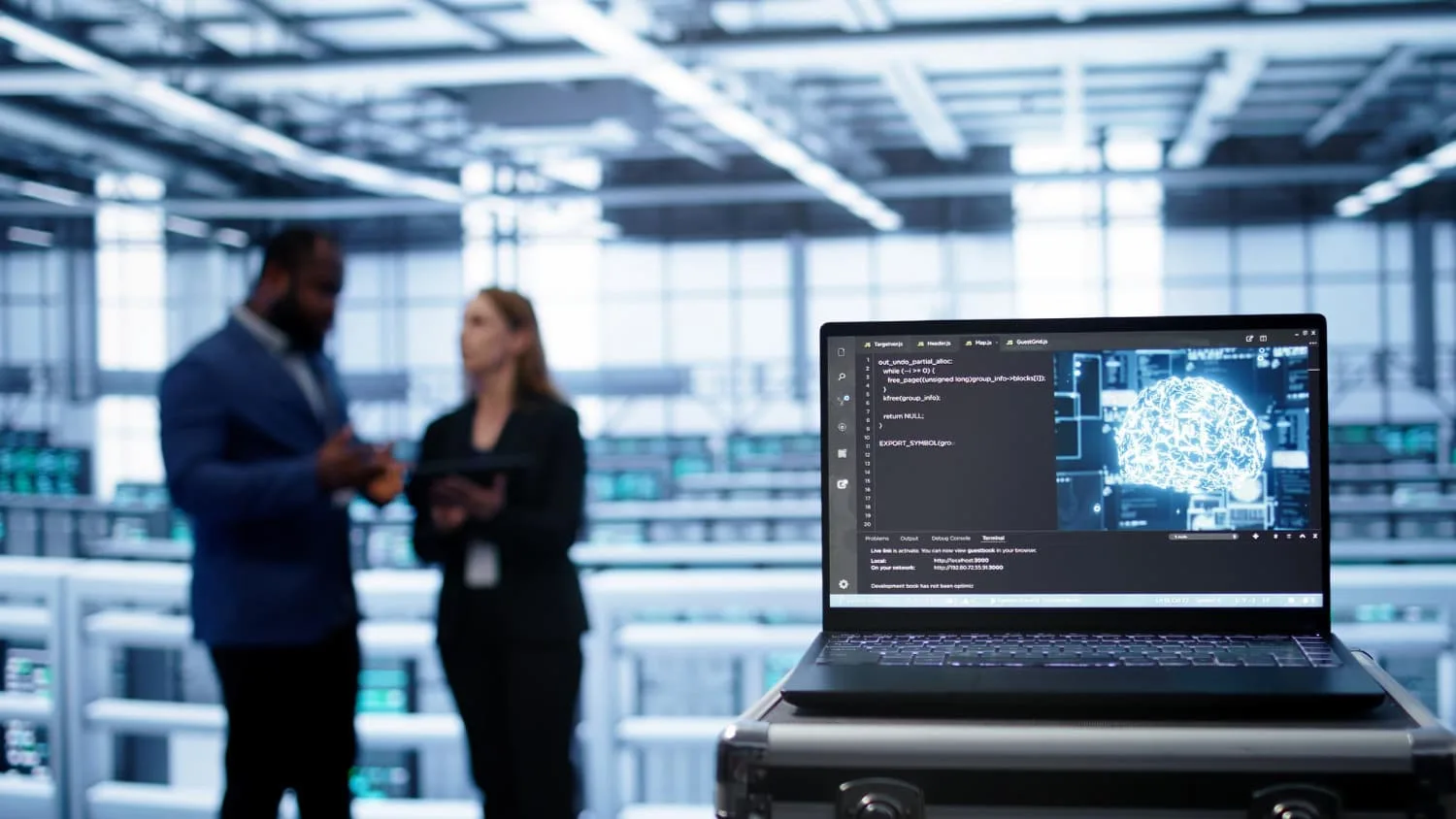
Not every data center has the same capability to support high-performance AI workloads. An AI-ready data center must address both the physical and digital requirements of GPU infrastructure and AI clusters.
1. High-Density Power for GPUs Server
AI and GPU servers can require significantly more power than conventional enterprise servers. The IEA estimates that individual server racks in advanced data centers could reach peak power demand equivalent to the electricity consumption of dozens of households later this decade.
Organizations therefore need high-density power capacity supported by appropriate distribution and redundancy.
2. Optimized Cooling Systems
Higher compute density also generates significantly more heat. Cooling becomes a critical factor in maintaining hardware performance, stability, and availability.
AI-ready infrastructure requires cooling strategies capable of maintaining optimal operating conditions based on workload characteristics and rack density.
3. High-Speed Networking and Low-Latency Connectivity
AI clusters require rapid communication between GPUs, servers, storage, and applications. High-speed networking and low-latency connectivity are therefore essential for maintaining consistent AI performance.
4. Scalable Infrastructure
An organization may begin with a limited number of GPUs and expand into larger AI clusters as use cases, models, and data volumes grow. Scalable infrastructure allows capacity to grow without requiring the entire environment to be rebuilt.
5. Power Redundancy and High Availability
Enterprise AI can support mission-critical workloads. Power, network, or cooling failures can interrupt AI services and the business processes that depend on them.
Redundancy and high availability should therefore be fundamental components of AI infrastructure planning.
Risks of Running AI on Infrastructure Not Designed for AI
Deploying GPUs does not automatically mean an organization has an AI-ready infrastructure.
When AI workloads run on infrastructure that was not designed for their requirements, several risks can emerge.
Reduced AI Model Performance
Limitations in compute, networking, or storage can create bottlenecks that slow training and inference. Even expensive GPU resources can become underutilized when the surrounding infrastructure cannot keep pace.
Storage and Network Bottleneck
AI workloads often require access to large volumes of data. Insufficient storage throughput or network bandwidth can slow processing and affect overall application performance.
Inefficient Power Consumption
As AI power density increases, energy planning becomes increasingly important. Infrastructure that is not designed for high-density workloads may face limitations in capacity, power distribution, and operational efficiency.
Downtime That Disrupt AI Operation
Power interruptions, overheating, or network failures can stop AI workloads. For organizations using AI as part of critical services or business processes, downtime can directly affect productivity and business continuity.
Security and AI Data Protection Challenge
AI workloads may process business data, customer information, intellectual property, and proprietary models. Physical security, access control, monitoring, and resilient infrastructure should therefore be part of the overall AI deployment strategy.
Why Colocation Data Center is a Strong Option for Enterprise AI Infrastructure?
Building an in-house data center capable of supporting AI requires significant investment in facilities, power infrastructure, cooling, networking, security, and operational resources.
For many organizations, building all these capabilities from scratch is not the only option. Data center colocation can provide a more flexible approach.
Reduced the Investment to Build Internal Data Center
Organizations can deploy GPU servers and AI infrastructure in a professionally managed data center facility without having to build and operate the physical facility themselves. This allows teams to focus more resources on AI development and business workloads.
Support GPU Server and AI Cluster
Colocation provides an environment for hosting enterprise infrastructure, including high-performance servers and AI systems. With appropriate power, cooling, and connectivity, organizations can establish a stronger physical foundation for AI deployment.
Flexibility to Expand Capacity
AI requirements can change rapidly. Colocation enables organizations to scale infrastructure capacity as workloads grow without building an entirely new data center.
Enterprise-Grade Physical and Operational Security
Data centers provide physical security and monitoring layers that help protect IT infrastructure.
This is particularly important when AI servers and GPUs represent high-value technology investments.
Connectivity to Multiple Cloud and ISPs
Carrier-neutral connectivity gives organizations more flexibility in selecting network providers. It can also support hybrid cloud strategies where AI workloads, applications, and data are distributed across multiple environments.
Build Reliable AI Infrastructure with Jedi Colocation & Data Center
Running enterprise AI demands more than just GPU power. Organizations need an infrastructure foundation capable of supporting high-performance computing, fast connectivity, power capacity, cooling, security, and long-term scalability.
Jedi Colocation & Data Center delivers colocation services designed to serve as that foundation for building enterprise AI infrastructure. Here is why you should build your AI infrastructure with Jedi Solutions.
AI-Ready Infrastructure
Supports AI workloads, GPU deployments, and high-performance applications through infrastructure purpose-built for enterprise requirements.
Carrier-Neutral Connectivity
Connected to multiple ISPs and cloud providers to deliver connectivity flexibility and support hybrid cloud strategies.
High Availability Infrastructure
Supported by power, cooling, and network redundancy to help maintain consistent operational availability.
Enterprise-Grade Security
Physical security measures and 24/7 monitoring help protect your servers and IT assets at all times.
Scalable Colocation Services
Capacity scales alongside your business growth and workload requirements, without the need to build and manage your own data center.
Available features include:
- Colocation Rack Space for secure placement of servers and IT equipment
- Redundant Power Supply with UPS and generator backup
- 24/7 Monitoring & Remote Hands
- Carrier-Neutral Connectivity to multiple ISPs and cloud providers
- Advanced Physical Security with biometric access, CCTV, and layered access controls
- Precision Cooling System
- High-Speed Network Connectivity with high bandwidth and low latency
- Disaster Recovery Ready Infrastructure to support business continuity
Organizations stand to gain a range of tangible benefits from supporting AI performance and mission-critical workloads, reducing the capital investment required to build internal data center facilities, and accelerating infrastructure expansion, to strengthening their hybrid cloud strategy.
Ensure your organization builds a more scalable, secure, and resilient infrastructure with Jedi Colocation & Data Center.
Jedi Solutions, part of CTI Group, is backed by a team of professionals ready to support your organization’s AI journey from initial deployment through to enterprise-scale expansion. Contact the Jedi team to ensure your organization has a data center that is fully compatible with the demands of AI.
Author: Ervina Anggraini – CTI Group Content Writer