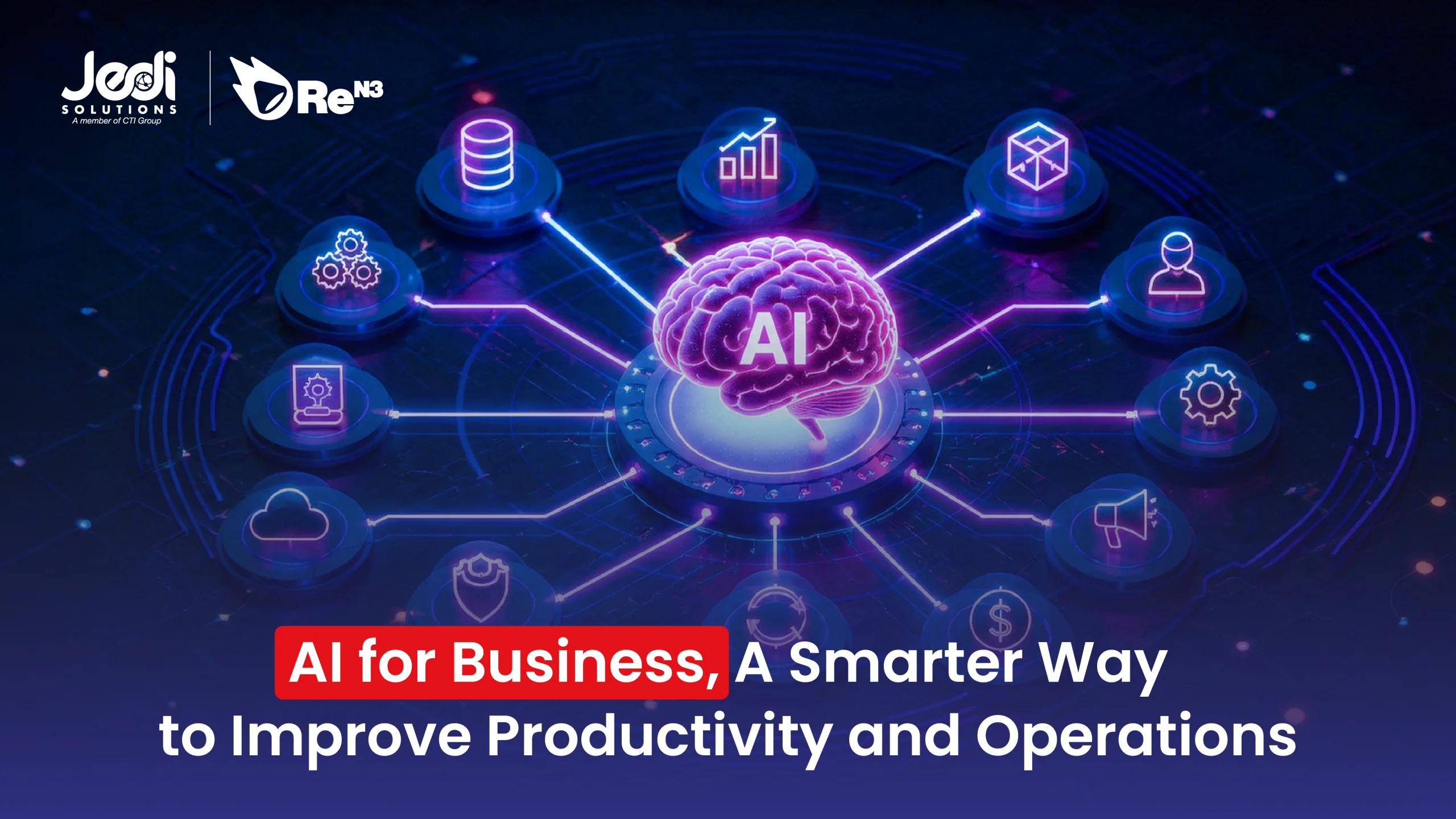
As business competition becomes increasingly intense, many companies are looking for ways to improve efficiency without continuously increasing operational costs. One solution that is gaining more attention today is AI for business.
AI is no longer just a futuristic technology used only by large enterprises. Today, AI has become a practical tool that helps businesses work faster, improve productivity, and optimize daily operations. With a more practical and accessible approach, AI technology is now being adopted across various business functions, from internal operations and customer service to data management and workflow processes.
Why is AI Becoming More Important for Businesses?
Many workplace activities are still done manually and repetitively. From searching for documents and summarizing meetings to answering recurring questions and processing data manually, these tasks consume valuable time and reduce overall productivity.
This is where AI automation starts to play an important role. With AI, many work processes can run faster and more automatically, allowing teams to focus on more strategic tasks. AI is not meant to replace people, but to help people work more efficiently.
How AI Helps Improve Business Efficiency?
As businesses continue to operate in fast-moving environments, companies need more efficient systems with fewer operational bottlenecks. AI helps simplify various business processes, including:
1. Reducing Manual and Repetitive Work
One of the biggest advantages of AI for business is its ability to reduce time-consuming administrative work. AI can help summarize important information, draft emails or reports, answer internal questions automatically, and manage simple workflows. With AI automation, tasks that previously took hours can now be completed faster and more consistently.
2. Accelerating Access to Information
Many companies struggle with information scattered across multiple platforms and documents. As a result, employees often spend too much time searching for files or data they need.
AI speeds up this process through natural language-based information retrieval. Users simply type questions in everyday language, and the AI system helps find relevant information within seconds. This capability is highly useful for accelerating employee onboarding, improving team collaboration, and reducing internal information search time.
3. Supporting Faster Decision-Making
AI also helps businesses understand data more quickly. Through automated data analysis, companies can identify business patterns, understand customer needs, and gain operational insights more efficiently. With faster, data-driven decisions, businesses can become more agile in responding to dynamic market changes.
4. Enhancing Customer Experience
AI also helps companies deliver faster, more responsive, and more consistent customer service. From chatbots and automated recommendation systems to internal AI assistants, these technologies help improve customer experience without significantly increasing team workload.
In addition, according to IBM Think Insights, AI implementation contributes to better service efficiency while accelerating overall business processes.
Common Challenges in AI Implementation
Despite its huge potential, many companies still see AI implementation as too complex or expensive. Some also worry that AI may be difficult for non-technical teams to use or require major system changes. In reality, AI implementation does not always have to be complicated.
Today, businesses need AI solutions that are easy to use, relevant to operational needs, scalable, and capable of supporting day-to-day work immediately. That is why simple and practical AI approaches are becoming increasingly important in modern business environments.
Read More: AI Order Processing Turns Manual PO Handling into Intelligent Automation
ReN3 AI, An Easier Way to Adopt AI for Business
As an enterprise AI platform, ReN3 AI helps companies adopt AI in a more practical and accessible way. ReN3 AI supports business efficiency through features such as:
- AI-powered knowledge retrieval
- AI workflow automation
- Enterprise AI assistant
- No-code AI agent builder
This platform also supports flexible deployment options, including cloud, hybrid, and on-premise environments, making it adaptable to different business needs.
Through its practical approach, ReN3 AI enables businesses to start leveraging AI without overly complex implementation processes.
Build More Productive Business Operations with JEDI Solutions
AI has become an important part of modern business transformation. Companies that can leverage AI effectively are able to work more efficiently, respond faster, and adapt better to change.
As part of CTI Group, Jedi Solutions is ready to help organizations adopt practical, scalable AI solutions tailored to business needs. Contact the JEDI team today to start exploring AI implementation that supports your company’s efficiency and productivity.
Author: Angela Merici Retna Perwitasari
Content Writer Intern CTI Group